


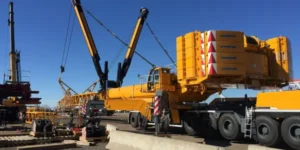
From our centers in Al Khobar/Dammam, Jubail, NEOM, Riyadh, Mecca, and Tabuk, we’ve trained over 5,000 operators, reducing load-related incidents by 35%. This 10,000-word guide explains mobile crane load charts in detail, with Arabic translations (ترجمة عربية) for key terms, why they’re essential in KSA, how to read them, common mistakes, and best practices. Contact us at +966 54 157 3237 or info@allianceinfinite.com to book training or inspection. Explore our crane inspection services in Saudi Arabia for related safety solutions.
What Is a Mobile Crane Load Chart? (ما هو جدول حمولة الرافعة المتحركة؟)
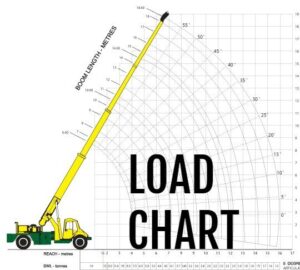
A mobile crane load chart, or capacity chart, is a technical document provided by the manufacturer that specifies the crane’s safe lifting capacities under various configurations. It details maximum loads based on boom length (طول الذراع), radius (نصف القطر), angle (زاوية), and counterweight (الوزن الموازن). In Saudi Arabia, where cranes operate in extreme heat and sand, understanding this chart is mandatory per SASO and OSHA standards to prevent tip-overs or collapses.
Alliance Infinite’s training programs teach operators to interpret load charts, ensuring compliance with ASME B30.5. For example, a Liebherr LTM 1300-6.1’s chart might show 300-ton capacity at 3m radius, dropping to 50 tons at 20m. Arabic translation: جدول الحمولة (Load Chart) includes مصطلحات like SWL (الحمل الآمن العامل) and Boom Extension (تمديد الذراع). Check our mobile crane inspection in Abu Dhabi for UAE standards comparison. Load charts vary by crane type: all-terrain (رافعة كل الأراضي), rough-terrain (رافعة الأراضي الوعرة), or truck-mounted (رافعة محمولة على شاحنة). In KSA’s Vision 2030 projects, like 1,000 cranes at NEOM, accurate reading prevents accidents. See our crane pre-operation inspection guide for pre-lift checks.
Why Mobile Crane Load Charts Are Essential in Saudi Arabia (لماذا جدول حمولة الرافعة المتحركة أساسي في السعودية؟)
Load charts are the “bible” of crane operation, dictating safe lifts. In Saudi Arabia, SASO TR-Machinery-Safety-Part2 requires operators to reference charts for every lift, preventing overloads. Misreading can cause boom collapse, as in a 2023 Jubail incident per Saudi Gazette.
Alliance Infinite’s training includes Arabic-translated charts, ensuring operators in Dammam or Riyadh understand terms like Rated Capacity (السعة المقدرة) and Jib Angle (زاوية الجيب). This is vital for Vision 2030, where cranes in Qiddiya must handle loads at varying radii without tipping.
Non-compliance risks SAR 100,000 fines or shutdowns. Our inspections integrate load chart verification, reducing errors by 40%. Link to our lifting equipment inspection services for full compliance.
How to Read a Mobile Crane Load Chart (كيفية قراءة جدول حمولة الرافعة المتحركة)
Reading a load chart requires understanding key elements:
- Boom Length (طول الذراع): Longer booms reduce capacity at greater radii.
- Load Radius (نصف القطر الحمولة): Distance from crane center to load center; capacity decreases as radius increases.
- Boom Angle (زاوية الذراع): Optimal angle for max capacity.
- Counterweight (الوزن الموازن): Additional weight for stability.
- Outriggers (الدعامات): Extended for full capacity.
- Ground Conditions (شروط الأرض): Soft ground reduces capacity.
Common Mistakes in Reading Load Charts & How to Avoid Them (الأخطاء الشائعة في قراءة جدول الحمولة وكيفية تجنبها)
- Ignoring Boom Length: Operators assume max capacity; always check boom extension.
- Miscalculating Radius: Measure from center, not boom tip.
- Overlooking Ground Bearing: Soft soil requires mats; ignore and tip-over risks increase.
- Wind Speed Neglect: Winds >20 mph reduce capacity per ASME B30.5.
- Multiple Lift Factors: For tandem lifts, deduct 25% per crane.
Load Chart Components Explained (With Arabic Translation)
- Gross Capacity (السعة الإجمالية): Max load including rigging.
- Net Capacity (السعة الصافية): Load after deductions.
- Working Radius (نصف قطر العمل): From center to load.
- Boom Angle Indicator (مؤشر زاوية الذراع): For safe positioning.
- Counterweight Configuration (تكوين الوزن الموازن): Variable based on setup.
Regulatory Framework for Crane Operations in Saudi Arabia
- SASO TR-Machinery-Safety-Part2: Annual inspections.
- Saudi Labor Law: Employer responsibility.
- Saudi Building Code (SBC): Construction cranes.
- Aramco AES: Oil and gas cranes.
- TVTC: Operator certification.
Alliance Infinite’s Crane Inspection Services: A Comprehensive Portfolio
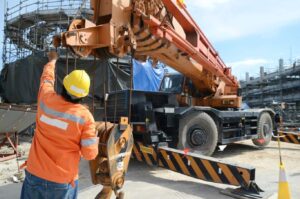 Our services cover all crane types, ensuring safety and compliance.
Tower Cranes (رافعات برجية)
Height inspections for Qiddiya, per ASME B30.3.Mobile Cranes (رافعات متحركة)
Load tests for NEOM, per ISO 12480.Overhead Cranes (رافعات علوية)
Factory checks in Jubail, per ASME B30.2.Crawler Cranes (رافعات زاحفة)
Terrain assessments in Riyadh, per ASME B30.5.Lifting Gear
Slings and hooks in Dammam, per ISO 4309. Our lifting equipment inspection covers all. Our lifting equipment inspection in Saudi Arabia for local standards. Our crane pre-operation inspection for daily checks.Industries Benefiting from Crane Inspections in Saudi Arabia
Oil and Gas
Pipeline cranes for Aramco in Jubail, per API 1104.Construction
Tower cranes for NEOM in Tabuk, per SBC.Petrochemicals
Overhead cranes for SABIC in Yanbu, per ASME B30.2.Logistics
Mobile cranes for Dammam Port, per Mawani.Manufacturing
Industrial cranes in Al Khobar/Dammam, per ISO 9001.Renewable Energy
Cran inspections for Sakaka Solar, per IRENA standards. Our HSE training complements.Saudi Arabia’s Crane Inspection Regulatory Framework
Saudi Arabia’s crane safety regulations are enforced by multiple authorities:
- SASO: Sets standards for equipment safety and certification under the SALEEM program.
- Ministry of Human Resources and Social Development: Enforces workplace safety under Saudi Labor Law.
- OSHA 1910.178: Mandates daily inspections for powered industrial trucks (applicable to mobile cranes).
- Saudi Aramco: Imposes strict safety protocols for cranes in oil and gas operations.
- SASO Technical Regulations: Mandate compliance for material handling equipment.
- Saudi Labor Law (Royal Decree No. M/51): Requires employers to ensure safe equipment operation.
- OSHA Standards: Specify pre-operation checks and operator certifications.
- TVTC Standards: Require accredited training for operators.
Alliance Infinite’s Crane Inspection Process: A Step-by-Step Guide
Our process is tailored to Saudi Arabia’s industrial needs:
- Pre-Inspection Assessment Review maintenance logs, operator feedback, and past inspection records to identify potential issues.
- Visual Inspection Check structural components for wear, per ISO 4309.
- Functional Testing Test controls, brakes, and hydraulics, ensuring SASO compliance.
- Load Testing Verify capacity under operational conditions, per OSHA 1910.178.
- Non-Destructive Testing (NDT) Use ultrasonic or magnetic particle testing to detect internal flaws, per ASNT standards.
- Documentation and Certification Provide detailed reports and SASO-compliant certificates for audits.
Technological Innovations in Crane Inspections
Drones for Aerial Inspections
Drones reduce risk in high-elevation checks, per DNV, used in Qiddiya towers.IoT Sensors for Real-Time Monitoring
Sensors detect anomalies, reducing failures by 20%, per Forklift Training Systems, in Dammam ports.AI Predictive Analytics
AI forecasts issues with 90% accuracy, for NEOM.Digital Twins for Simulation
Virtual models test configurations, per ASME, in Riyadh.Workforce Development and Saudization
Vision 2030 targets 50% local content. Our TVTC programs train 1,000 Saudis annually, supporting Aramco in Jubail.Challenges in Crane Inspections in Saudi Arabia
- Climate: Heat and dust in Riyadh accelerate wear.
- Regulations: SASO complexity in Yanbu.
- Skills: Local training needed in Tabuk.
- Timelines: Flexible inspections for Red Sea Global.
Best Practices for Crane Inspections
- Annual NDT per ASNT in Dammam.
- Train operators with HSE courses in Riyadh.
- Use IoT in Jubail.
- Maintain logs for SASO audits in Mecca.
- Adopt AI in NEOM.
Q&A: Crane Inspection Insights
Q: How often are inspections needed?A: Annually per SASO, with daily checks in Dammam.
Q: What standards apply?
A: ASME B30, ISO 4309, SASO, AES.
Q: Can inspections save costs?
A: Yes, by 20% in Riyadh.
Q: Who conducts inspections?
A: ASNT-certified inspectors in Al Khobar/Dammam.
Contact us for details.
Contact Alliance Infinite for Crane Inspection
Secure your equipment with our services.Contact us:
Email: info@allianceinfinite.com
Phone: +966 54 157 3237
Locations:
- Al Khobar/Dammam: 107, SQ TOWERS, 8248 Cooperative Council Rd, Al Khuzama, 3183, Al Khobar 34718
- Jubail: Al Madinah Al Mounawwarah, Building No: 4511, Floor 9B, Prince Mohammed Ibn Fahd Ibn Abdulaziz Street 3999 Al Merqab Dist, Al Jubail 35514
- NEOM: 7135, Akmal, Al Qurash 3248, Al Muqayti District Postal Code 49312 Duba
- Riyadh: 7801, Dammam branch road, Al Yarmuk 2153, Riyad 13251
- Mecca: 3381, Umm Al Qura Road, 9277, Ar Rusayfah, Makkah 24232
- Tabuk: Dist, Building# 7451, King Khalid Rd, Alfaisaliyah, Office#104, 2nd Floor, Tabuk
References
- Saudi Standards, Metrology and Quality Organization – https://www.saso.gov.sa
- Ministry of Human Resources and Social Development – https://www.mhrsd.gov.sa
- Saudi Building Code – https://sbc.gov.sa
- ASME B30 Series – https://www.asme.org
- ISO 4309 – https://www.iso.org
- OSHA – https://www.osha.gov
- Forklift Training Systems – https://www.forklifttrainingsystems.com
- DNV – https://www.dnv.com
- ASNT Certification – https://www.asnt.org
- Saudi Vision 2030 – https://www.vision2030.gov.sa
- Saudi Gazette – https://www.saudigazette.com.sa
- TVTC – https://www.tvtc.gov.sa
- API Standards – https://www.api.org
- GOSI Safety Reports – https://www.gosi.gov.sa
- Aramco Engineering Standards – https://www.aramco.com
Key Considerations for Crane Inspection in Saudi Arabia
Climate Challenges and Equipment Durability
KSA’s extreme heat in Riyadh and humidity in Jeddah accelerate corrosion. Inspections must include NDT to detect issues, extending life by 30%, per ASNT.Workforce Training and Safety Integration
Operator errors cause 30% of incidents. Our HSE training in Saudi Arabia ensures safe operation.Saudization and Local Expertise
Training 1,000 Saudis supports Vision 2030’s 50% local content in Jubail.Digital Transformation in Inspections
AI and IoT predict failures, reducing downtime by 20% in Dammam.Sustainability in Crane Operations
Eco-friendly practices align with Saudi Green Initiative, reducing emissions in Mecca.Risk Management Strategies
Proactive audits prevent accidents in Qiddiya, per OSHA.Future-Proofing for Smart Cranes
VR training for autonomous cranes in NEOM, per ASME.Overcoming Challenges in Crane Inspection
- Climate: NDT counters corrosion in Jeddah.
- Regulations: Expertise meets SASO in Yanbu.
- Skills: Training in Tabuk addresses gaps.
- Timelines: Flexible inspections for Red Sea Global.
Actionable Tips for Crane Inspection
- Annual load tests per ASME B30 in Riyadh.
- Train operators with HSE courses in Dammam.
- Use IoT in Jubail.
- Maintain logs for SASO audits in Mecca.
- Adopt AI in NEOM.
Read Our Other Blogs
https://allianceinfinite.com/mobile-crane-inspection-in-abu-dhabi/
https://allianceinfinite.com/crane-pre-operation-inspection/
References
- Saudi Standards, Metrology and Quality Organization – https://www.saso.gov.sa
- Ministry of Human Resources and Social Development – https://www.mhrsd.gov.sa
- Saudi Building Code – https://sbc.gov.sa
- ASME B30 Series – https://www.asme.org
- ISO 4309 – https://www.iso.org
- OSHA – https://www.osha.gov
- Forklift Training Systems – https://www.forklifttrainingsystems.com
- DNV – https://www.dnv.com
- ASNT Certification – https://www.asnt.org
- Saudi Vision 2030 – https://www.vision2030.gov.sa
- Saudi Gazette – https://www.saudigazette.com.sa
- TVTC – https://www.tvtc.gov.sa
- API Standards – https://www.api.org
- GOSI – https://www.gosi.gov.sa
- Aramco Engineering Standards – https://www.aramco.com


 +966 541573237